logo

Learna

BlogFAQ

How to Start Small Talk in English Conversations?

Small talk often starts with one simple observation, not a perfect sentence. If you feel nervous, begin with a greeting and mention something you both share, such as the weather, the location, or the event. This makes small talk feel friendly without getting too personal.

Date September 18, 2026 · Anna Hanks

Looking at how to start small talk in English examples can help, but memorizing long scripts usually does not. It is more useful to learn a few flexible phrases and adapt them to different situations. For example, “Hi, how is your day going?” works at work, in class, or at a social event. For guided speaking practice, you can also explore Daily Life English conversations based on everyday situations.

What Makes a Good Small Talk Opener?

A good opener has two simple parts: a polite greeting and a neutral shared topic. Start with “Hi,” “Hello,” or “Good morning,” then comment on something related to the situation. At a conference, for example, you could say, “Hi, have you attended this event before?”

This works because the other person understands the context right away. You do not need unusual icebreaker questions or clever ice breakers. A clear question that fits the moment will usually sound more natural.

Keep your first question easy to answer. “How do you know the host?” feels less demanding than “Tell me about yourself.” The aim is to start a conversation, not ask for someone’s life story.

Your voice and body language matter, too. Speak clearly, use a relaxed tone, and make natural eye contact. A friendly expression can make even a basic “Hello” feel welcoming.

Safe Topics and Opening Phrases

Useful small talk topics include the weather, the day or week, the place around you, and sincere compliments. These topics give both people something familiar to talk about. They are also helpful things to talk about when your mind suddenly goes blank.

Use this small talk cheat sheet when you need ideas for social, academic, or professional situations.

💬 Topic ✨ Opening phrases
Weather “It is lovely outside today, isn't it?” “Did you expect this much rain?”
Day or week “How is your day going?” “Has it been a busy week for you?”
Shared environment “This café has a nice atmosphere. Have you been here before?” “What did you think of the presentation?”
Sincere compliment “That is a great notebook. Where did you find it?” “I enjoyed your question during the meeting.”
Food or drink “That looks good. What did you order?” “Have you tried the coffee here?”
Local area “Do you know this area well?” “Is there somewhere nearby that you recommend?”

The setting helps you choose the right conversation starters. Asking about a presentation makes sense at a conference, while asking about local restaurants may work well with a new coworker. If you give a compliment, keep it specific and respectful. It is usually safer to compliment someone’s choice, idea, or item rather than their body or appearance.

Some learners look for 100 small talk questions and answers, or a small talk phrases list before they speak. These lists can give you ideas, but real conversations depend on listening and reacting. Practicing ten useful questions aloud can build more confidence than reading a list of one hundred in silence.

How Can You Keep the Conversation Going?

Think of a conversation as a gentle game of ping pong. One person asks a question or makes a comment, the other responds, and then the topic comes back with a related question or detail. If someone says, “I moved here last month,” you might reply, “How are you finding the area so far?”

Open questions invite more than a yes or no answer. Questions starting with “what,” “how,” or “why” often lead to fuller replies:

  • “What do you enjoy about your course?”

  • “How did you become interested in photography?”

  • “What are you planning to do this weekend?”

  • “Why did you choose this event?”

Active listening phrases show that you are interested and give you a moment to think. Try “That sounds interesting,” “Really?” or “I know what you mean.” Then ask a question connected to what the person just said.

The three question rule can help when you run out of ideas. Ask up to three related questions about one topic, then share something about yourself or move on to another subject. This keeps the exchange balanced instead of making it feel like an interview.

Good English conversation practice includes both sides of the chat. Practice asking a question, answering it, reacting, and adding a relevant detail. This is more helpful than memorizing a small talk questions and answers list, because real people rarely follow a fixed script.

Topics to Avoid in Small Talk

Some subjects can feel too personal when you have only just met someone. Politics, religion, personal finances, age, and private health matters are usually poor opening topics. People may have strong feelings about these subjects, or they may simply prefer not to discuss them.

Questions such as “How much do you earn?” and “Why are you not married?” can sound rude or overly direct. Even if these questions are common in one culture, they may make an English conversation uncomfortable. Stick to shared experiences and general interests until you know the person better.

It is also wise to avoid gossip, insulting jokes, and negative comments about people nearby. If a topic feels uncomfortable, change direction politely. You could say, “Speaking of work, how is your current project going?” Respectful topics to talk about give everyone room to join in or move on.

How Can You Make Small Talk Feel Natural, Not Awkward?

Learning how to make small talk without being awkward starts with accepting that short pauses are normal. A pause does not mean the conversation has failed. Sometimes both people are simply thinking of what to say next.

Prepare three or four good conversation starters for situations you often face. Say them aloud until they feel familiar, then practice possible answers and follow-up questions. This kind of English speaking practice builds pronunciation, listening skills, and faster responses at the same time.

Try to focus on curiosity instead of trying to sound impressive. Listen for one useful detail, then ask about it. If someone mentions a weekend trip, you do not need to find a completely new topic. Ask where they went or what they enjoyed most.

It also helps to give slightly longer answers. Instead of saying only, “Yes, I like films,” try, “I especially like comedies because they help me relax.” That extra detail gives the other person an easy way to continue the conversation.

When a chat reaches a natural stopping point, end it politely. “It was nice talking with you” or “I hope you enjoy the event” closes the conversation without pressure. Even a short exchange is useful practice, and a few quiet moments are completely normal.

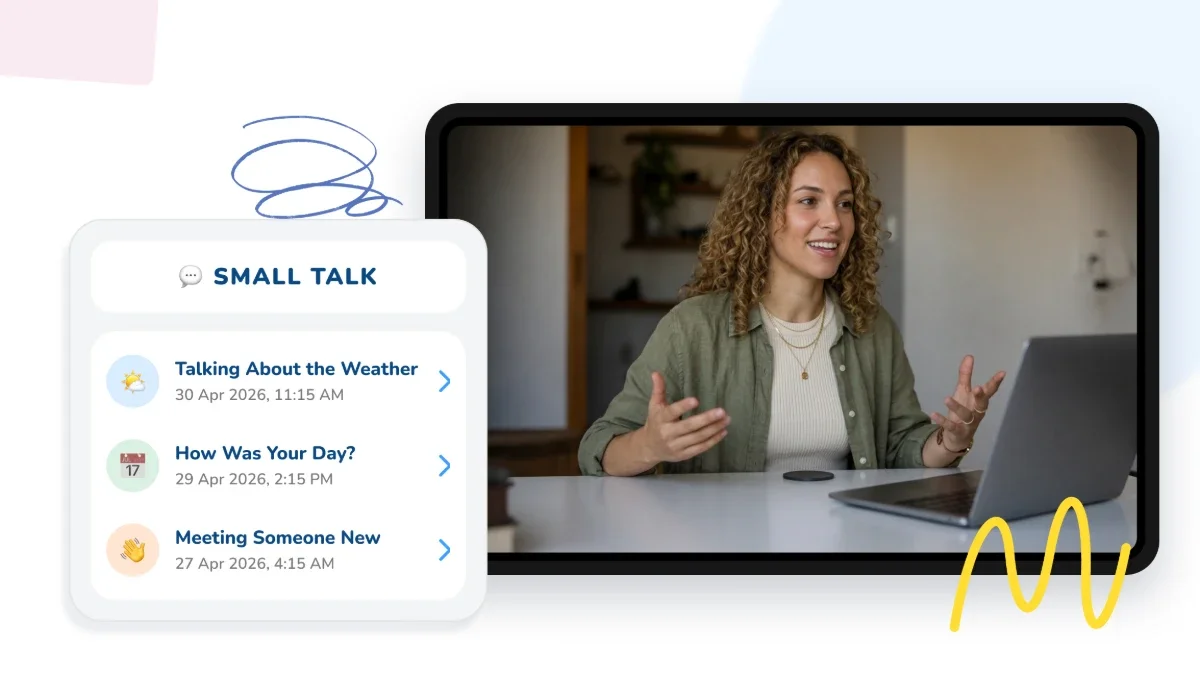
For regular roleplay conversations, Learna helps you rehearse greetings, follow-up questions, and everyday responses before trying them with new people. The same speaking practice also supports learners studying Spanish or French, with scenarios focused on speaking the language aloud.

FAQ

Frequently Asked Questions

What’s the best way to start small talk?

Greet the person and mention a neutral shared topic. Try, “Hi, how are you finding the event?” It gives the other person an easy, relevant question to answer.

What is the 3 question rule for small talk?

The three question rule means asking up to three related questions before sharing your own experience or changing the subject. It keeps the conversation balanced and stops it from feeling like an interview.

What are good small talk starters?

Common starters include “How is your day going?”, “Have you been here before?”, and “What did you think of the presentation?” The best opener is one that fits your shared setting.

How to make small talk without being awkward?

Use familiar phrases, ask open questions, and listen for details you can ask about next. Let brief pauses happen. Natural conversations do not need nonstop talking.

What should I avoid saying in small talk?

Avoid questions about salary, age, religion, politics, relationships, and private health matters. Gossip and negative comments can also feel risky when you do not know the other person well.

What are the do’s and don’ts of small talk?

Do greet people, listen carefully, choose neutral subjects, and share relevant details. Do not interrupt, ask intrusive questions, dominate the conversation, or force a chat when someone seems busy.

How to turn small talk into deep talk?

Follow an interesting detail with a more thoughtful question. If someone says they enjoy their work, ask what makes it meaningful. Use deep conversation starters only when both people seem comfortable.

What are some good opening questions?

Try “How do you know the host?”, “What brings you here?”, “How has your week been?”, or “Have you tried this place before?” Choose a question that connects to the setting.

What are 5 good conversation starters?

Five good conversation starters are: “How is your day going?”, “What did you think of the event?”, “Do you know this area?”, “What are you working on?”, and “Any plans for the weekend?”

What are 10 good questions to ask?

Ask about someone’s day, weekend, work, studies, hobbies, travel, food, local area, the event, or a recent experience. Keep each question open, neutral, and connected to the conversation.

Can Learna help me practice small talk conversations out loud?

Yes. Learna offers roleplay conversations for everyday situations. You can practice opening phrases, responses, pronunciation, and follow-up questions while getting feedback on unclear wording or mistakes.

Does Learna work for practicing small talk in Spanish or French too?

Yes. Learners can practice spoken scenarios in Spanish and French as well as English. Regular roleplay can help you feel more comfortable with greetings, everyday questions, and natural responses in each language.

Learna AI

#1 Personal AI Language Tutor

Learna AI is a personal AI language tutor that turns daily practice into real speaking confidence. Through scenario based roleplay and instant feedback, learners build fluency in English, Spanish, and French at their own pace, anytime, on any device. To experience how consistent, daily speaking practice can fit into your routine, you can begin your personalized journey today and start speaking with greater confidence, learn more about Learna AI.

92% of users report feeling more confident speaking English after using Learna AI.