
Speak English Confidently While Traveling Abroad ✈️
Learna AI helps travelers practice real travel English conversations before departure. Airports, hotels, restaurants, and transport situations are all covered through realistic roleplay and instant feedback.
What Is Travel English?
Travel English is the practical, phrase-based form of English used in real travel situations including airports, hotels, restaurants, public transport, and sightseeing. Unlike formal English, it focuses on immediate, situational communication. The goal is to respond confidently and naturally without hesitation when it matters most.
How Learna AI Teaches Travel English?
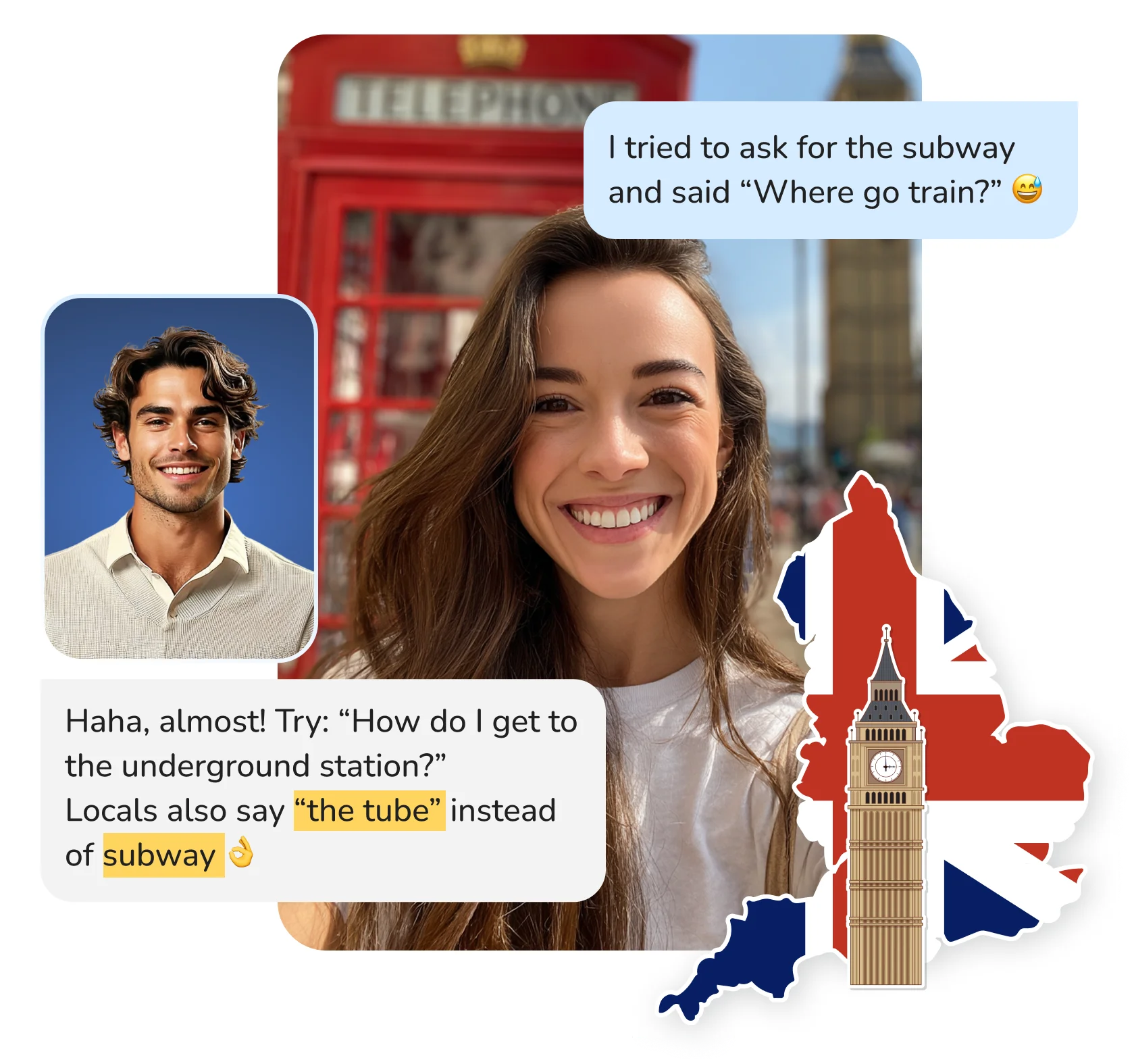
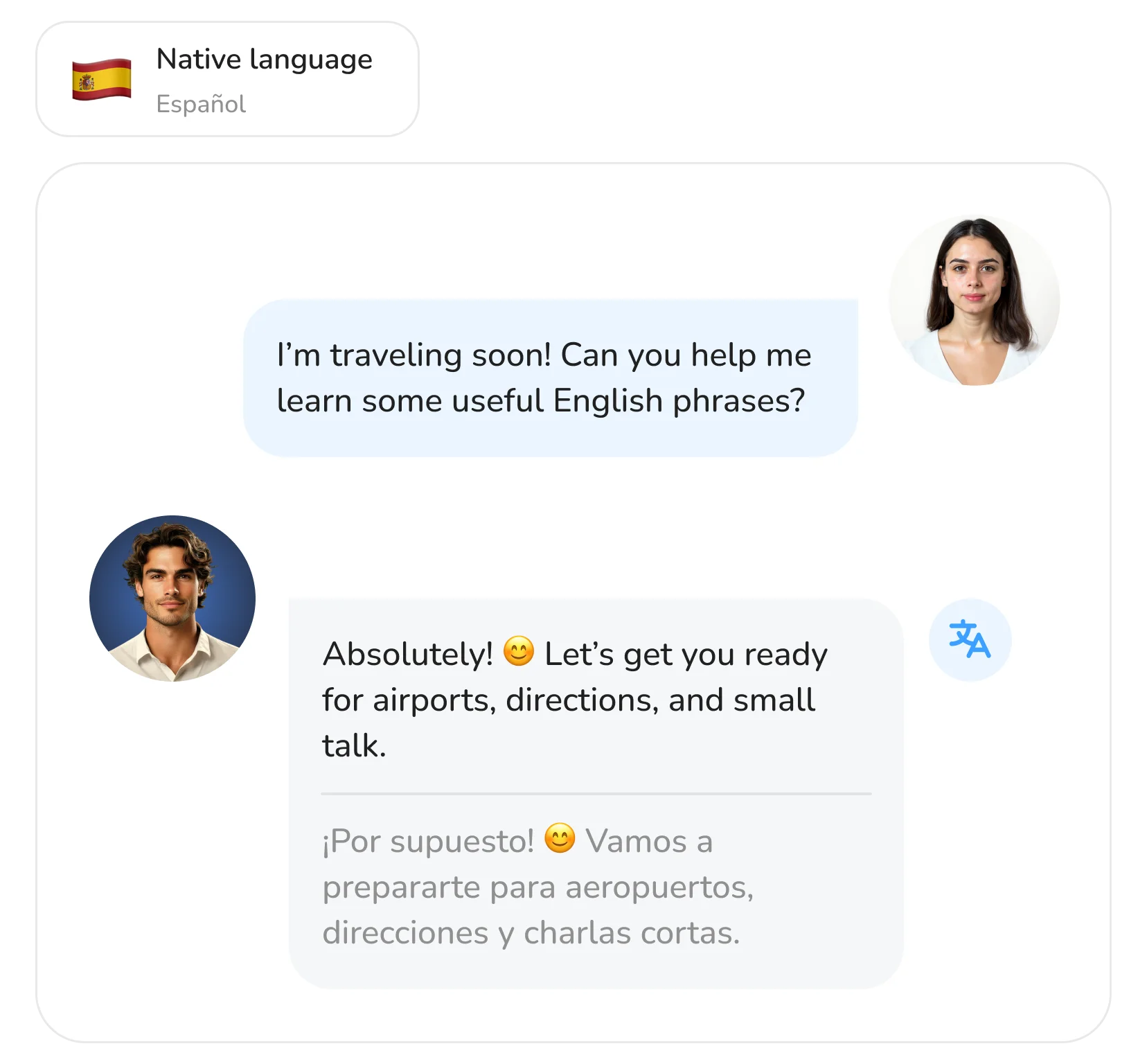
Learna AI simulates real travel scenarios like airport check-in, hotel reception, and restaurant ordering through realistic roleplay, with real-time feedback on pronunciation, vocabulary, and phrasing. Adaptive lessons focus on the situations each traveler needs most, building the response speed to handle conversations naturally under pressure. Learners can also build confidence in everyday English conversations as a next step.
Common Travel English Challenges
Most travelers struggle with pronunciation, freezing when staff speak quickly, or not knowing what to say when something goes wrong.
Pronunciation: "Could you speak a little slower, please?"
Not understanding: "Sorry, could you say that again?"
Flight delays: "Could you tell me when the next flight is?"
Lost luggage: "I cannot find my suitcase. Who can I speak to?"
Essential Travel English Phrases
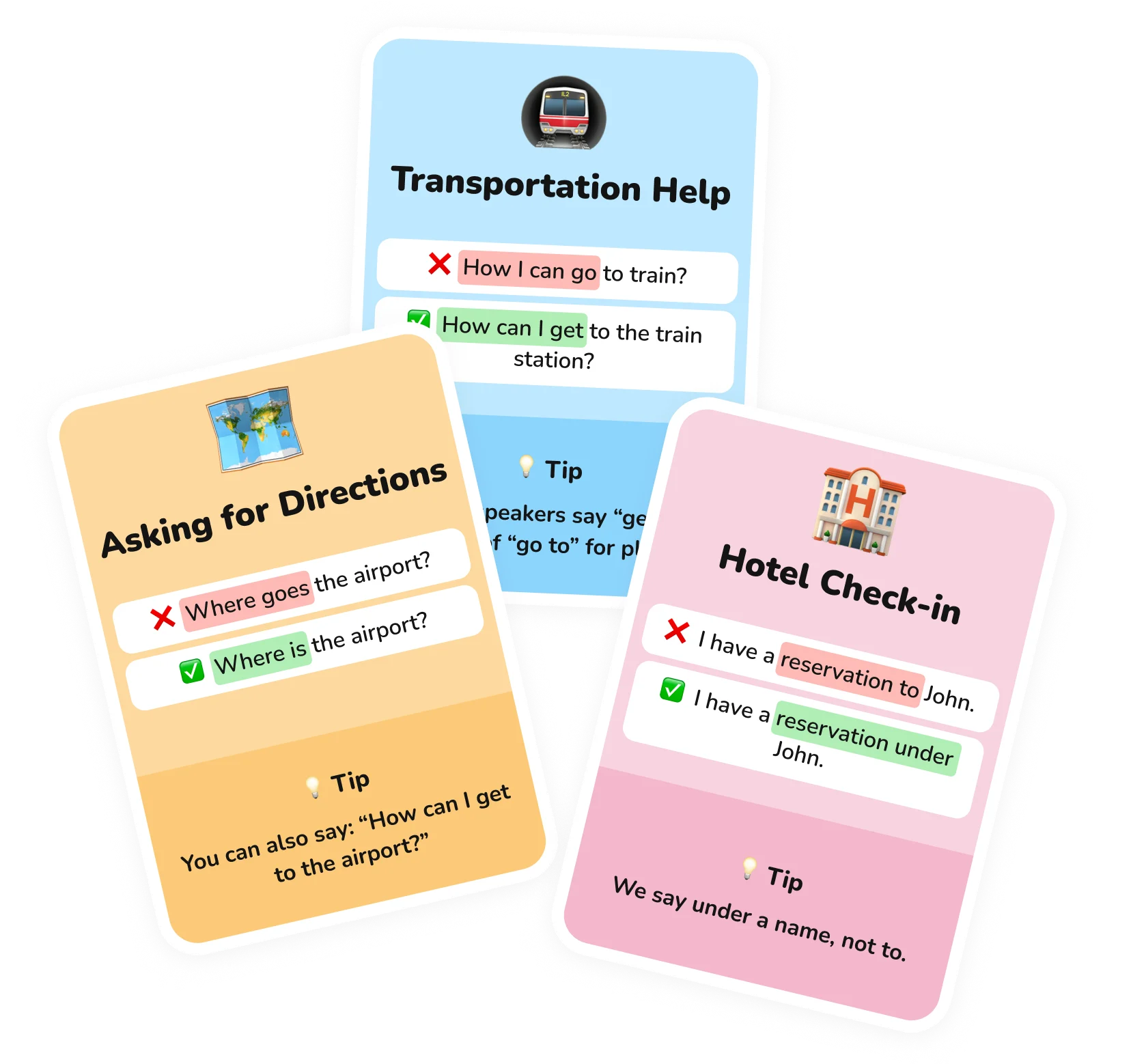
Building a reliable set of travel phrases before departure reduces anxiety and speeds up real interactions.
Airport & Transport
- Where is the check-in counter for...?
- Can I request an aisle seat, please?
- How long until we reach the gate?
- Is there a shuttle bus between terminals?
Hotel Check-In
- I have a reservation under the name...
- Is breakfast included in the room rate?
- Could you help me with my bags?
- What time is check-out?
Restaurant & Dining
- A table for two, please.
- Do you have anything suitable for vegetarians?
- Could I have the bill, please?
- What do you recommend today?
Directions & Navigation
- Excuse me, where is the nearest ATM?
- Could you show me on the map?
- Could you repeat that more slowly, please?
- How do I get to the city center from here?
Travel English Grammar and Vocabulary
Question Forms
Key Vocabulary
American vs British
Scenario-Based Spoken English
Knowing individual phrases is useful, but handling full conversations requires familiarity with how interactions unfold in each setting.
✈️ At the Airport
- Check-in, security, and boarding vocabulary
- How to answer common questions from airline staff
- Handling delays, lost baggage, and connecting flights
🏨 At the Hotel
- Confirming reservations and making room requests
- Asking about amenities and local restaurant recommendations
- Reporting problems and handling check-out
🛍️ Restaurants & Shopping
- Ordering food, stating dietary requirements, and splitting the bill
- Shopping: asking about sizes, prices, returns, and fitting rooms
- Sightseeing: buying museum tickets, joining tours, and asking about admission
🗣️ Talking to Locals
- Natural small talk starters with new people
- Asking for help without sounding scripted
- Polite phrases for asking someone to repeat or slow down
How to Use Learna for Travel English?
Choose Your Travel Scenario
Select the situation you need most — airport, hotel, restaurant, or getting around. Learna builds the session around that context from the start.
Practice Real Conversations
Each session uses realistic dialogue rather than memorized lines. The AI tutor responds naturally, keeping exchanges as close to real travel interactions as possible.
Get Instant Feedback
After each response, Learna identifies pronunciation issues, suggests more natural phrasing, and corrects vocabulary. Corrections are specific so learners apply improvements immediately.
Frequently Asked Questions
What is Travel English?

What are the most important English phrases for traveling?
How can I practice travel English before my trip?
What English do I need to know at the airport?
How do I check into a hotel in English?
What do I say when ordering food in English?
How do I ask for directions in English?
What should I say if I don't understand someone while traveling?
How do I handle problems at a hotel in English?
What are common English phrases for shopping abroad?
Can Learna AI help me prepare for a trip if I am a beginner?
How is Travel English different from everyday conversational English?
What English phrases are useful for talking to locals?
How long does it take to feel ready to travel in English?
Can I use Learna AI to practice business travel English?
Learna AI
Learna AI is a personal AI language tutor that turns daily practice into real speaking confidence. Through scenario based roleplay and instant feedback, learners build fluency in English, Spanish, and French at their own pace, anytime, on any device. To experience how consistent, daily speaking practice can fit into your routine, you can begin your personalized journey today and start speaking with greater confidence, learn more about Learna AI.