
Master Academic English with Your AI Tutor 🎓
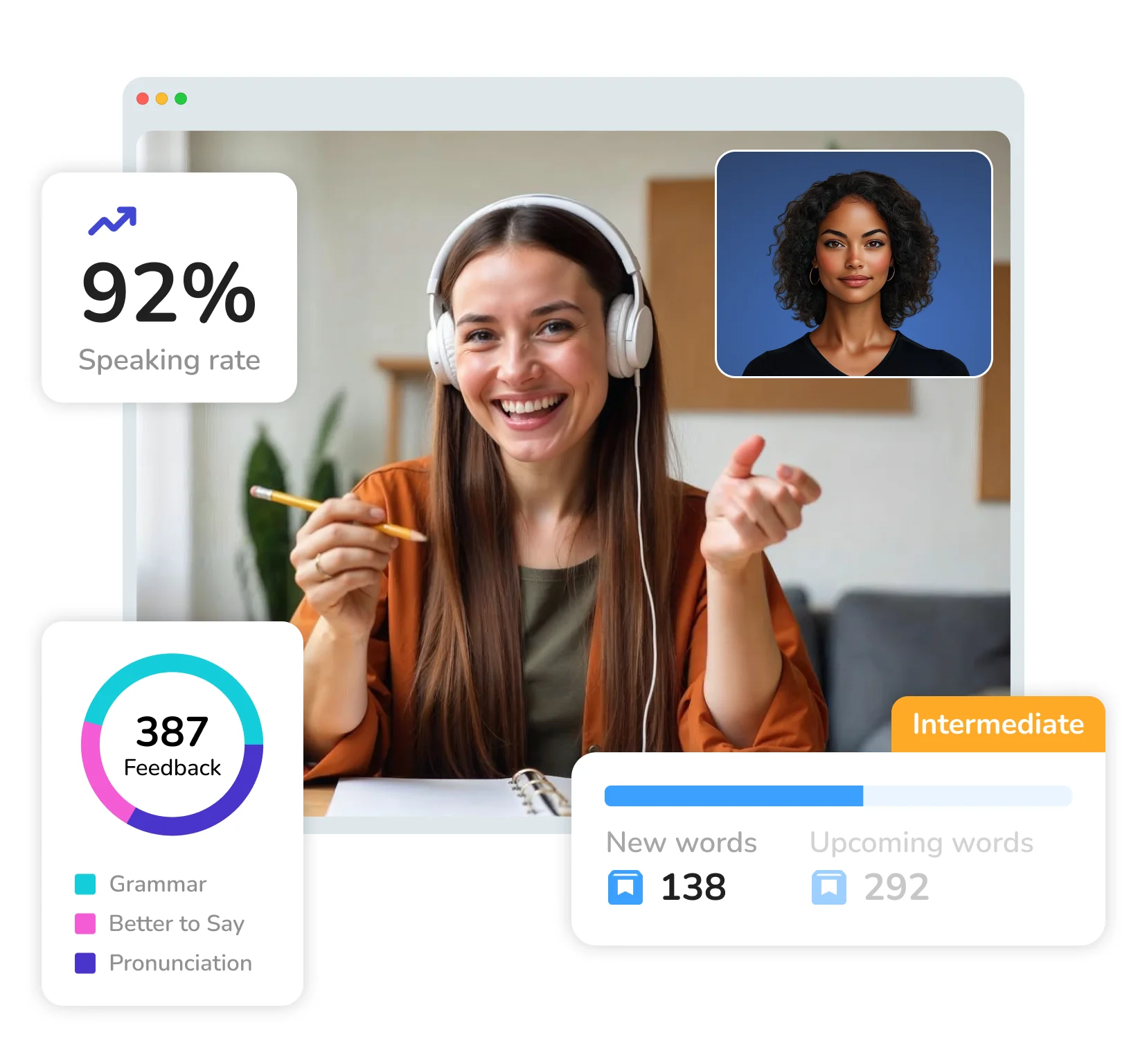
Learna AI helps students, researchers, and academic professionals build the formal English skills needed for essays, seminars, and research presentations. 92% of users report feeling more confident speaking English, and 72% report a noticeable expansion in vocabulary and expressiveness.
What Is Academic English?
Academic English, also known as English for Academic Purposes (EAP), is the formal and objective language used in universities, research, and scholarly publishing. It prioritizes precision, logical reasoning, and evidence based argumentation. Learners use it in essays, thesis defenses, seminars, and research articles.
How Learna AI Teaches Academic English?
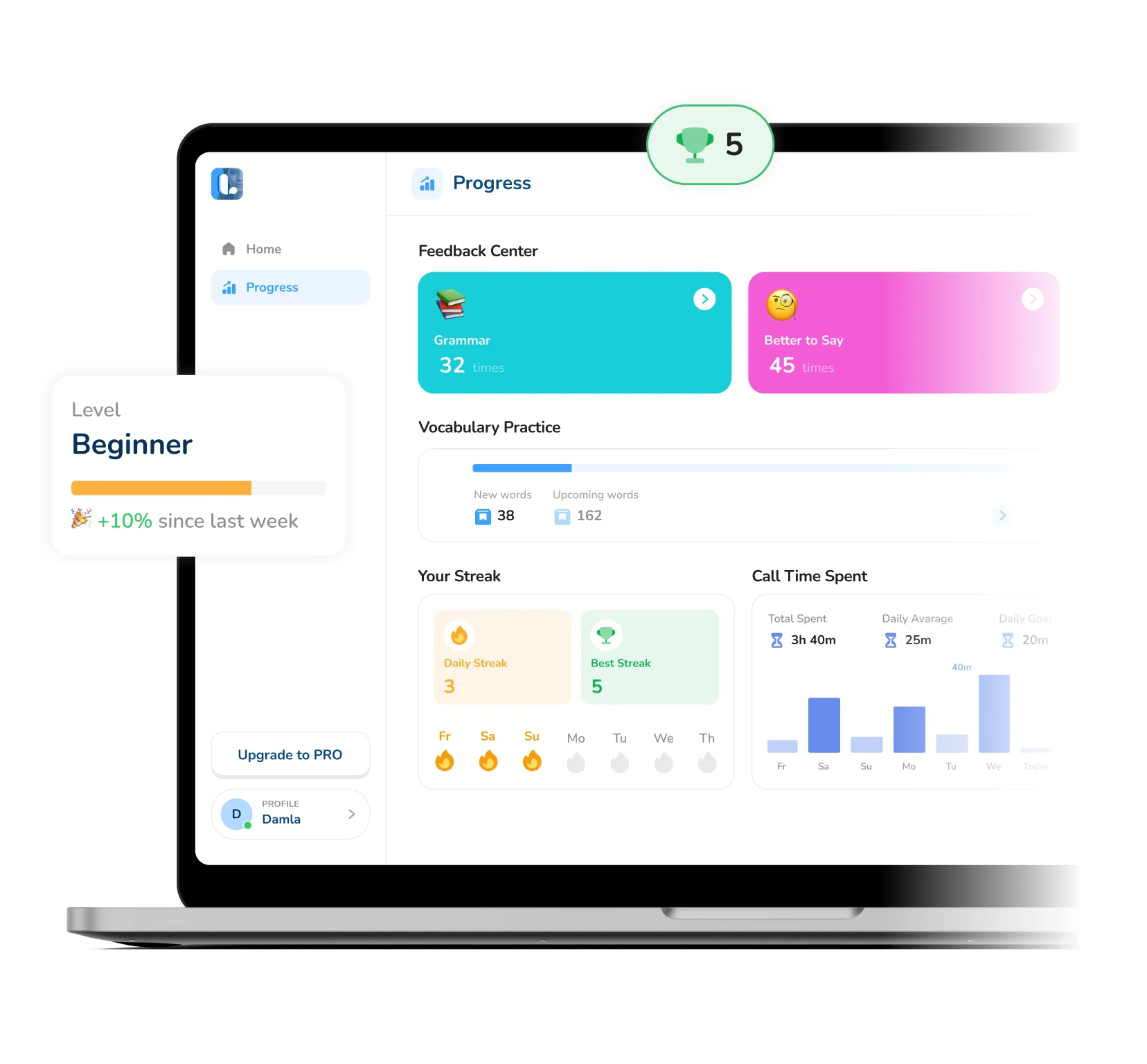
Learna AI builds academic English through realistic roleplay, structured grammar lessons, and immediate corrective feedback. The AI tutor simulates seminar discussions, thesis defenses, and research presentations, correcting hedging language, formal vocabulary, and citation phrasing in real time. Progress tracking shows improvement in vocabulary range and speaking confidence over time.
Who Uses Academic English?
Academic English is used by university students writing essays and dissertations, researchers preparing journal articles and conference presentations, international students preparing for university admission, and exam candidates targeting PTE, IELTS, or TOEFL. Learners preparing for proficiency exams will find focused support through academic vocabulary and exam preparation.
Academic English vs General English
Academic English and General English serve different communicative purposes. While General English supports everyday interactions, Academic English operates under stricter conventions with three core pillars:
Formality
Academic English avoids contractions and colloquialisms. A general speaker might write "I think this is true," while an academic writer rephrases it as "The evidence suggests that..."
Objectivity
Academic writing focuses on facts rather than opinion. First-person expressions like "I believe" or "in my opinion" are replaced with objective, evidence-led statements.
Hedging Language
Since research rarely deals in absolutes, writing relies on cautious indicators like "suggests", "indicates", and "may" to build strong academic credibility.
Academic Vocabulary and Phrases
Building a strong academic vocabulary is one of the most practical steps toward writing and speaking with authority. The phrases and words below reflect the core categories used across academic disciplines.
Hedging Language
Used to express cautious claims and maintain academic credibility.
- suggests
- indicates
- appears to
- may
- is likely to
- tends to
Formal Connectors
Used to build logical flow between sentences and paragraphs.
- furthermore
- consequently
- in contrast
- therefore
- moreover
- nevertheless
Academic Verbs
Used to describe research actions and analytical processes.
- analyze
- demonstrate
- examine
- indicate
- establish
- argue
Essay & Argument
Used to introduce claims, evidence, and conclusions.
- this suggests that
- the evidence indicates
- it can be argued
- in light of these findings
Academic English Skills
Academic English develops four core skills: reading, writing, speaking, and listening. Each plays a distinct role in university study and research, and strong performance in academic settings requires competence across all four.
Writing
MOST FREQUENTLY ASSESSEDWriting is the key method of assessment in academic contexts. Essays, research papers, and dissertations follow specific structural conventions. A well-constructed essay opens with a clear thesis, develops each point with evidence, uses transitions to maintain cohesion, and closes with a conclusion that reflects on the argument rather than simply restating it. Understanding essay format, applying APA or MLA citation styles, and using transition phrases effectively are foundational requirements at university level.
Reading
Reading builds the vocabulary and structural awareness that feeds directly into writing. Engaging regularly with academic articles trains learners to recognize formal sentence patterns, discipline-specific terminology, and the logic of evidence-based argument.
Speaking
Speaking matters in seminar participation, thesis defenses, and conference presentations. Academic spoken English requires clear organization, formal vocabulary, and the ability to respond to questions under pressure.
Listening
Listening supports comprehension in lectures, seminars, and research discussions where precise understanding of complex arguments is essential.
How to Use Learna for Academic English?
Tell Your Academic Goal
At first login, Learna asks about proficiency level, study context, and target skills. Whether the goal is essay writing, seminar participation, or exam preparation, the platform builds a personalized lesson plan from the first session.
Practice with Academic Roleplay
Each session places learners in authentic academic scenarios. Conversations simulate seminar debates, thesis question-and-answer sessions, and research presentations. The AI tutor responds naturally, keeping the dialogue realistic and challenging.
Review Instant Corrections
After each response, Learna identifies grammar issues, suggests stronger vocabulary, and flags unnatural phrasing. Corrections are specific and contextual, so learners understand exactly how to improve and apply that improvement in the next response.
Frequently Asked Questions
What is Academic English?

What is the difference between Academic English and General English?
What is EAP (English for Academic Purposes)?
Who should take an Academic English course?
How can an AI tutor help improve Academic English?
Do learners need an advanced level before starting Academic English?
How long does it take to see improvement in Academic English?
Can Learna AI help with academic vocabulary and formal expressions?
What is hedging language and why is it used in academic writing?
How is academic vocabulary different from everyday vocabulary?
Can Learna AI help with essay writing and structure?
Does Learna AI prepare learners for exams like IELTS or TOEFL?
How does Learna AI give feedback on academic writing and speaking?
Is Learna AI suitable for university and research preparation?
Learna AI
Learna AI is a personal AI language tutor that turns daily practice into real speaking confidence. Through scenario based roleplay and instant feedback, learners build fluency in English, Spanish, and French at their own pace, anytime, on any device. To experience how consistent, daily speaking practice can fit into your routine, you can begin your personalized journey today and start speaking with greater confidence, learn more about Learna AI.