
Improve Your English for Career Growth 💼 and Job Interviews
Learna AI helps professionals build the speaking confidence needed for meetings, emails, interviews, and presentations through real workplace practice and instant feedback.
What Is Business English?
Business English is a specialized form of English used in professional settings including meetings, negotiations, emails, and presentations. It emphasizes precision, diplomacy, and industry specific terminology to help communicators build credibility, strengthen client relationships, and advance their careers in international environments.
.webp?alt=media&token=fa8018cb-541f-423b-b3ab-6809a783aa74)
How Learna AI Teaches Business English?
Learna AI builds Business English through realistic workplace roleplay, adaptive grammar lessons, and immediate corrective feedback. The AI tutor simulates real meetings, negotiations, and interview scenarios, correcting tone, formality, and word choice as they occur. Progress tracking shows fluency improvement and error reduction over time, so learners can see measurable development across sessions.
.webp?alt=media&token=d6a74133-f004-403c-bc19-5d83d26f4d60)
Business English Levels and Who It's For
Business English isn't only for advanced speakers Learna AI adapts to your level, whether you're preparing for meetings, practicing interviews, or emailing colleagues abroad.
Beginners: foundational vocabulary, simple phrases, basic email structure
Intermediate: meeting participation, structured email writing, professional small talk
Advanced: negotiation language, leadership communication, persuasive presentations
Business English Vocabulary and Grammar
Strong workplace communication starts with the right vocabulary and grammar. The categories below cover the core language patterns used across professional industries and communication formats.
Vocabulary for Finance, Sales, & IT
Industry-specific vocabulary signals fluency and authority in professional conversations.
Verb Tenses & Phrasal Verbs
Accurate tense use and natural phrasal verbs make workplace communication sound fluent.
Listening & Reading
Comprehension in professional settings requires active listening and reading strategies.
- Practice with real meeting recordings and email samples
- Identify key points and action items from spoken input
- Build comprehension speed for fast-paced conversations
Business English for Meetings, Presentations, and Negotiations
Professional communication varies significantly depending on the context. Meetings require concise signposting. Presentations depend on structured delivery. Negotiations call for diplomatic firmness. Each format follows its own conventions. Professionals who want to strengthen the written side of their workplace communication alongside speaking will find it useful to explore academic essay structure and formal writing as a foundation for professional report writing and structured business correspondence.
Phrases for Meetings
Use clear, professional phrasing to direct discussions, politely contribute ideas, and wrap up agendas.
Phrases for Presentations
Capture audience attention, transition naturally between topics, and deliver a memorable closing message.
Phrases for Negotiations
Protect boundaries gracefully, frame win-win strategies, and clarify priorities during deals.
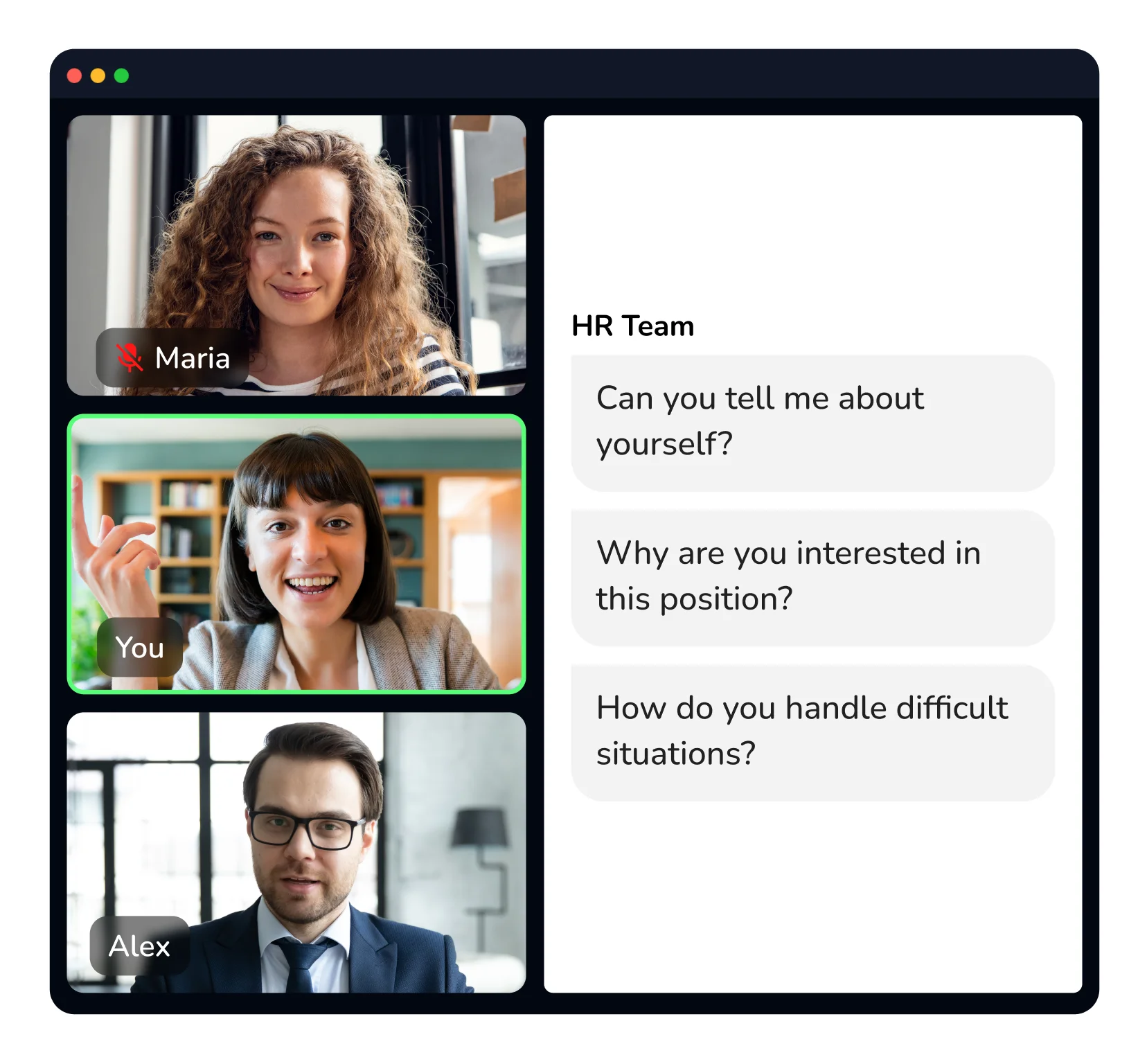
Job Interviews, Applications, and Career English
Job interviews are among the most high-stakes speaking situations professionals encounter in English. Clear structure, confident delivery, and precise vocabulary make the difference between a forgettable answer and one that resonates. Professionals who want to extend their practice beyond formal workplace settings and into natural conversational English will benefit from building everyday conversational English habits alongside Business English training.
🎙️ Interview Questions & Answers
Preparation starts with understanding the most frequent question types and how to respond to each with clarity and purpose.
📝 Strong CV & Cover Letter
A professional CV and cover letter communicate competence before a single word is spoken in an interview.
✉️ Follow Up & Etiquette
How a candidate communicates after an interview matters as much as the interview itself.
📈 Career Growth Opportunities
Improving Business English has measurable effects beyond individual interviews and meetings.
How to Use Learna for Business English?
Tell Learna Your Work Goal
At first login, Learna asks about professional context and communication priorities. Whether the focus is meetings, email writing, or interview preparation, the platform builds a personalized lesson plan from the first session.
Practice Real Workplace Scenarios
Each session places learners inside authentic professional situations. The AI tutor responds naturally during negotiations, presentations, and mock interviews, keeping dialogue realistic and appropriately challenging throughout.
Review Instant Corrections
After each response, Learna identifies tone issues, suggests stronger vocabulary, and flags unnatural phrasing. Every correction is specific and contextual, so learners understand exactly what to change and apply that improvement immediately in the next exchange.
Frequently Asked Questions
What is Business English?

What does Business English include?
What's the difference between English and Business English?
What are the four main skills in Business English?
Is Business English hard to learn?
What level of Business English is considered fluent?
Is Business English in demand today?
What jobs use business communication?
What are common job interview questions in English?
How should I answer "What are your weaknesses?" in an interview?
Can Learna AI help me write a follow-up email after an interview?
How can Learna AI help with job interview preparation?
Do I need advanced English to start Business English?
How can an AI tutor help improve workplace communication?
I know English grammar but freeze during meetings or interviews. What should I do?
Learna AI
Learna AI is a personal AI language tutor that turns daily practice into real speaking confidence. Through scenario based roleplay and instant feedback, learners build fluency in English, Spanish, and French at their own pace, anytime, on any device. To experience how consistent, daily speaking practice can fit into your routine, you can begin your personalized journey today and start speaking with greater confidence, learn more about Learna AI.