
Best Spanish Learning Apps in 2026: Quick Overview
The best way to learn Spanish depends on individual learning goals, which is why the best Spanish learning app varies from one learner to the next. Some learners need structured speaking practice, others want a clear grammar framework, and some prioritize flexibility or free Spanish learning apps that fit into a busy schedule. Instead of ranking apps for learning Spanish only by popularity, learners should consider learning style, motivation, and the type of practice that keeps them consistent. A tool built around short daily lessons suits one learner, while another benefits more from conversation-based practice or audio-driven repetition.
Why Learna Is One of the Best Spanish Learning Apps in 2026?
Many learners struggle with one specific problem: they understand vocabulary and grammar but hesitate when it comes to speaking. Speaking confidence often develops more slowly than reading or listening skills, largely because learners consume language more than they actively use it. Modern AI-powered learning tools increasingly focus on helping learners practice rather than only study, and Learna reflects this shift directly.
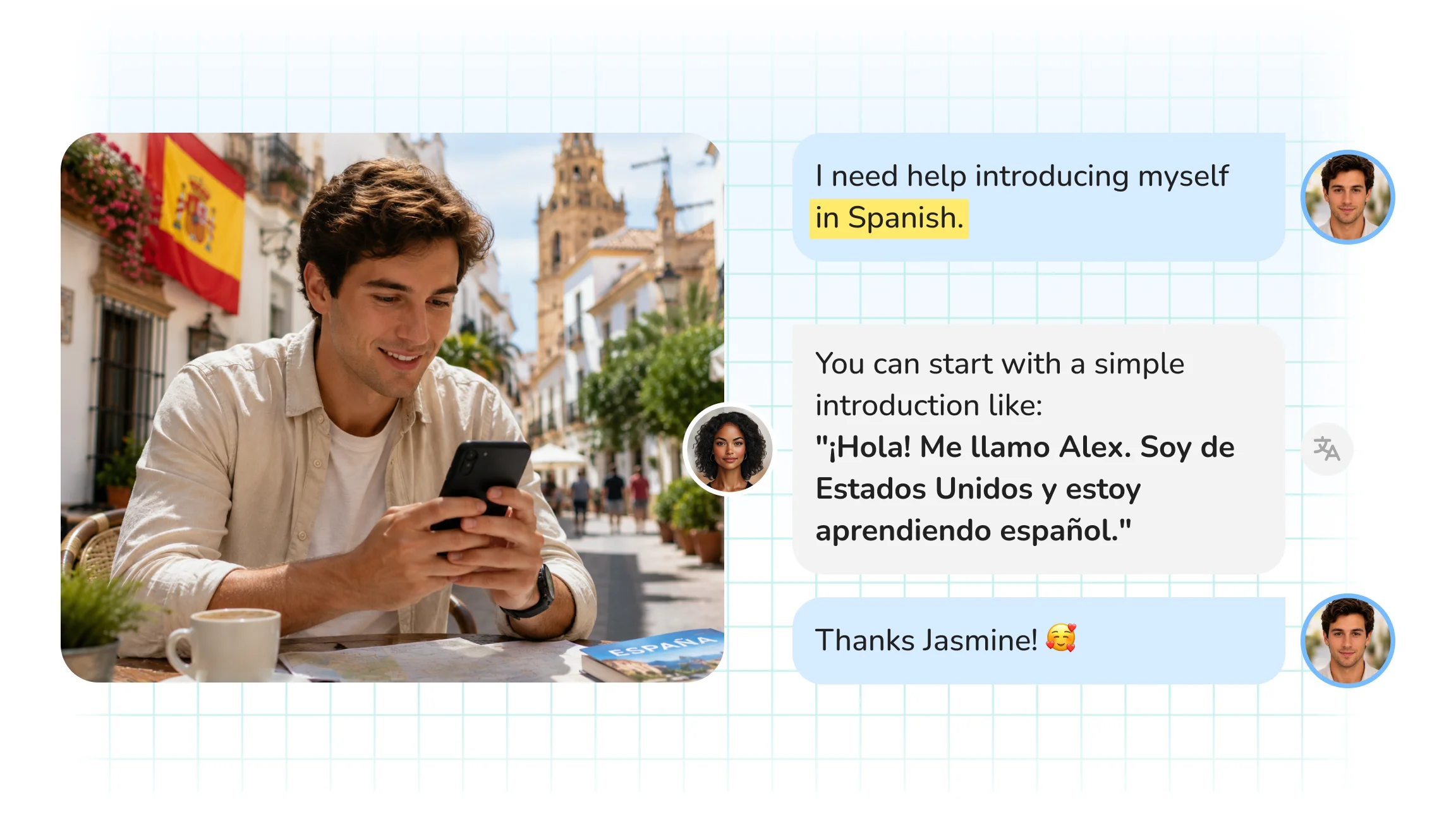
AI-powered speaking practice on Learna gives learners a space to produce language out loud instead of only recognizing it on a screen. Interactive speaking exercises may help learners become more comfortable forming sentences in real time, which is a different skill from simply understanding what a sentence means.
Conversation based learning shifts the focus from isolated vocabulary drills to functional exchanges. Practicing within a conversation format can help learners connect words to context, which often makes new vocabulary easier to recall later.
Adaptive exercises adjust to a learner's current level rather than following a fixed path for everyone. This may reduce the frustration of exercises that feel either too easy or too advanced.
Personalized learning paths allow the app to prioritize the vocabulary and structures most relevant to a learner's goals, whether that involves travel, daily conversation, or general fluency.
Guided study structure gives learners a clear sequence to follow, which can be useful for those who find open-ended practice difficult to stick with.
Speaking confidence support is built into the practice format itself, since repeated low pressure speaking exercises can make it easier to speak spontaneously outside the app.
Real life dialogue scenarios simulate situations such as ordering food, asking for directions, or making small talk, giving learners practice with language they are likely to encounter directly.
Flexible daily learning routines let learners fit short sessions into their day, which supports the kind of consistency that tends to matter more than occasional long study sessions.
Best Apps for Spanish Speaking and Real Conversations
Many learners reach a stage where they understand Spanish but struggle to participate in conversations naturally. Speaking usually requires separate practice, since passive understanding does not automatically translate into active communication. Some apps prioritize speaking and conversational interaction over grammar drills.
1- Learna
Conversation practice often becomes easier when learners can repeat it without pressure. Learna's AI conversations allow learners to practice dialogue repeatedly, building familiarity with common exchanges before using them in real situations. Interactive speaking sessions, dialogue practice, and flexible timing give learners room to build confidence gradually rather than all at once.
2- Pimsleur
Pimsleur focuses heavily on listening and spoken repetition through audio-based lessons. This format suits learners who want to practice during a commute or other hands-free moments, with an emphasis on pronunciation and building listening habits over time.
3- LanguaTalk
LanguaTalk combines human tutoring with AI-supported tools. Sessions with native speakers give learners direct conversational practice, while structured tutor interaction adds a layer of feedback that self-guided apps do not typically provide.
Best Apps for Beginners Learning Spanish
Beginners often benefit more from simple learning systems and structured habits than from advanced feature sets. Starting with too many features can feel overwhelming before the basics are in place.
Duolingo
Duolingo is frequently mentioned among the best free Spanish learning apps, emphasizing habit-building through short lessons and gamified progress tracking that can help beginners stay consistent in the early stages of learning.
Babbel
Babbel offers a clear lesson structure with beginner-friendly progression, introducing vocabulary and grammar in a sequence designed to build steadily on previous lessons.
Best Apps for Spanish Grammar and Vocabulary Building
Some learners prioritize grammar understanding, while others want practical communication first. Grammar and vocabulary tools can help create a stronger foundation for both approaches.
Memrise
Memrise focuses on vocabulary retention through spaced repetition, helping learners reinforce new words through repeated exposure over time.
AI Language Learning Apps Are Changing Spanish Learning
AI learning tools increasingly focus on interaction rather than passive exercises. Adaptive learning adjusts content based on a learner's progress, while real time feedback can highlight areas that need more attention. Features such as speaking support, conversation simulation, and personalization are becoming more common across language learning apps, supporting practice rather than replacing structured teaching. Tools such as Learna represent a broader shift toward practice-centered learning experiences that give learners more opportunities to actively use the language.
How to Learn Spanish Faster Using Apps?
Many learners search for the fastest way to learn Spanish or ask how long it takes to reach a usable level, but learning speed usually depends more on study habits and consistency than on choosing one perfect app.
Why Daily Practice Matters More Than Long Study Sessions?
Learners looking for the fastest way to learn Spanish often assume that longer sessions lead to faster results, but consistency tends to matter more than duration. Fifteen to thirty minutes of daily practice tends to build stronger habits than several hours of study completed once a week, since regular exposure helps reinforce memory over time. Short, frequent sessions also fit more naturally into a daily routine, which makes it easier to sustain practice over the weeks it typically takes to notice real progress. Those asking how long it takes to learn Spanish often find that steady daily habits shorten that timeline more effectively than occasional intensive study.
Focus on Frequent Words Before Advanced Grammar
Prioritizing commonly used phrases before advanced grammar rules can help learners start using Spanish sooner. A relatively small set of high-frequency words covers a large share of everyday conversation, so focusing on these first often produces more usable results than memorizing rare vocabulary or complex grammatical structures early on. Once learners feel comfortable navigating common exchanges, advanced grammar tends to become easier to absorb, since it builds on vocabulary that is already familiar.
Combine Listening and Speaking
Practicing listening and speaking together tends to improve retention more than working on either skill in isolation. Listening exposes learners to natural pronunciation, rhythm, and sentence structure, while speaking requires actively recalling and producing that same language. Combining both skills reinforces vocabulary from multiple directions, which can make words and phrases easier to remember and apply in real conversations.
Which Spanish Learning App Fits You Best?
There is no single best Spanish learning app for everyone, because learners have different goals, study styles, and motivation levels. Some learners want structured lessons, others prioritize speaking confidence, and some simply need tools that fit naturally into daily routines. Choosing an app should depend on what a learner wants to improve most, whether that is speaking and conversation practice, beginner friendly learning, grammar understanding, vocabulary building, listening skills, or flexible daily study habits.
Language learning apps in 2026 are becoming more interactive, personalized, and conversation focused. Learners increasingly look for tools that support real practice, confidence building, and flexible routines rather than passive study alone. Learna is one example of an AI-powered learning experience that supports speaking practice, adaptive exercises, and guided study routines designed for ongoing learning habits.
