
What Makes AI Language Learning Different in 2026?
Modern AI language learning combines real conversations, adaptive lessons, voice interaction, and instant feedback instead of relying only on flashcards or fixed grammar drills. This shift changes how people build speaking confidence day to day.
An AI language tutor can hold a conversation, correct pronunciation in real time, and adjust difficulty based on a learner's responses. Traditional tools follow a fixed sequence of lessons regardless of how a person performs. An AI language app, by contrast, can slow down, repeat a concept, or introduce new vocabulary depending on actual progress rather than a preset schedule.
A few elements define this shift:
AI powered conversations that respond naturally instead of following scripted dialogue trees
Personalized learning paths that adjust pacing based on accuracy and speaking habits
Real time feedback on grammar, word choice, and sentence structure
Pronunciation analysis that flags specific sounds or patterns needing attention
Scenario based learning built around situations like travel, work, or daily conversation
Compared with traditional classroom tools, ai for language learning removes the wait time between practice and correction. Learners get immediate input, which tends to support faster habit formation.
Top AI Language Learning Apps in 2026
AI language apps vary based on learning style, speaking goals, and practice methods. The list below looks at each app by feature focus rather than ranking by overall superiority.
1. Learna AI: AI Powered Language Learning for Daily Speaking Practice
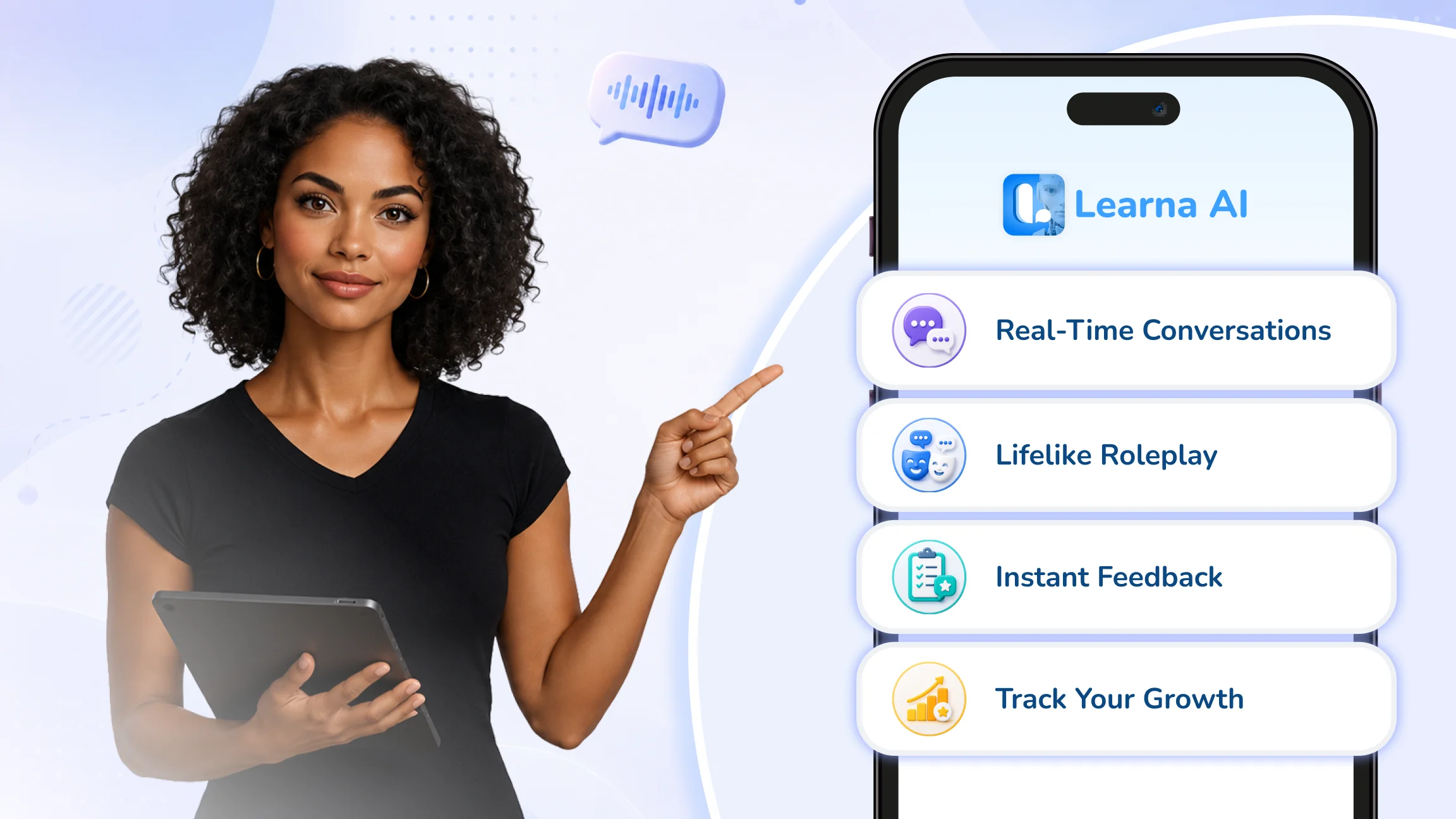
Learna AI centers on AI powered speaking practice through a conversation-based learning approach. Each session follows a personalized lesson flow, with adaptive exercises that adjust based on the learner's progress and recorded performance.
Interactive dialogues form the core of the experience, paired with pronunciation and speaking support built directly into the conversation rather than offered as a separate step. The structured daily learning experience moves from a short grammar explanation into language practice through real-world scenarios, such as ordering coffee, checking into a hotel, or handling a work call.
This flow gives both complete beginners and ongoing learners a consistent way to practice, since the system adjusts vocabulary, pacing, and scenario complexity to wherever the learner currently stands.
2. Babbel: Structured Lessons with Practical Dialogue
Babbel is built around structured, course-style lessons with practical, everyday dialogue. Lessons follow a set sequence covering grammar, vocabulary, and short conversational exercises, with review sessions built in to reinforce earlier material.
3. Rosetta Stone: Immersive, Visual Based Learning
Rosetta Stone uses an immersive method that pairs images directly with words and phrases, without translation. The approach emphasizes pattern recognition and includes a speech recognition tool for pronunciation practice within structured lesson units.
4. Duolingo: Gamified Daily Practice
Duolingo focuses on short, gamified lessons built around streaks, points, and daily reminders. Exercises cover vocabulary and grammar through multiple choice and matching formats, with brief speaking and listening exercises included in some lesson types.
5. Busuu: Community Reviewed Conversation Practice
Busuu combines structured lessons with a community feature that allows native speakers to review written and spoken exercises. This adds a human feedback layer alongside its core grammar and vocabulary curriculum.
6. Elsa Speak: Pronunciation and Accent Support
Elsa Speak specializes in pronunciation analysis, giving detailed speech feedback focused on individual sounds and accent reduction rather than broader conversation practice.
7. Memrise: Vocabulary and Phrase Practice
Memrise centers on vocabulary exposure and phrase repetition, using short video clips of native speakers to reinforce everyday language examples and natural phrasing.
Which Features Matter for Different Learning Goals
The right combination of features usually depends on what a learner is trying to achieve. Someone preparing for travel has different priorities than someone trying to sound more natural in a work meeting.
Speaking Confidence
Frequent, low pressure speaking practice with immediate feedback tends to matter more than vocabulary volume.
Pronunciation Practice
Detailed sound-level feedback and repeated practice on specific phonemes are more useful than broad conversation exposure alone.
Daily Study Structure
A clear, repeatable lesson flow supports consistency, especially for learners who study in short daily sessions.
Real Life Conversations
Scenario-based exercises help bridge the gap between studying a language and actually using it in context.
Vocabulary Development
Repetition based exercises with everyday examples support long term retention more effectively than one-time exposure.
Do AI Language Learning Apps Actually Help?
AI language tools can support speaking consistency, repetition, and daily practice habits, particularly for learners who don't have regular access to a conversation partner or tutor.
Several factors contribute to this:
Speaking repetition builds muscle memory for pronunciation and sentence structure
Personalized feedback corrects mistakes before they become habits
Conversation exposure helps learners get comfortable with natural pacing and phrasing
Daily routines, even short ones, tend to outperform infrequent long study sessions
That said, AI only practice has limits. It can't fully replace human nuance in tone, humor, or cultural context, and learners aiming for advanced fluency often benefit from combining ai language practice with real conversations alongside native speakers.
Start Practicing with Learna AI
Learna AI brings the features described above into a single daily practice routine. Each session opens with a short concept or vocabulary set, then moves directly into a roleplay conversation built around that material, so new language is used right away instead of only being reviewed.
The system keeps track of recurring mistakes and adjusts upcoming sessions accordingly, which means practice stays focused on what actually needs work rather than repeating material a learner has already mastered. Sessions can run as short as a few minutes or extend into longer conversations, fitting into different daily schedules without losing structure.
For travelers preparing for a trip, Learna AI's travel focused practice applies this same conversation based approach to common situations like check in conversations, asking for directions, and everyday interactions abroad.
Features to Look For in AI Language Learning Apps
When comparing AI language learning tools, a few features tend to matter most:
Voice conversations that respond naturally rather than following fixed scripts
Real time AI feedback on pronunciation, grammar, and word choice
Personalized learning paths that adjust based on actual performance
Speaking exercises built around realistic dialogue, not just repetition
Progress tracking that reflects genuine improvement over time
Conversation scenarios tied to real situations like travel or daily life
Feature combinations tend to matter more than the total number of tools or isolated features in isolation. Learners focused on speaking, consistency, and adaptive practice often do better with platforms that combine conversation exercises with a structured daily flow, an approach Learna AI is built around, pairing speaking practice with adaptive activities inside a consistent learning routine.
