
Back to School Vocabulary: Essential Words for Students
Learning the right vocabulary before the school year starts makes those first conversations, with teachers, classmates, or your kids' school, much easier. If you want to build these words into a daily routine, you can Learn English with a structured plan that adapts to your level. Here are the essential words grouped by category.
Classroom Objects
I need a new notebook for this class.
Can I borrow your eraser for a second?
The teacher wrote the homework on the whiteboard.
Don't forget to bring your calculator to math class.
School Supplies
She packed her backpack the night before school started.
We bought new pencils and markers for the semester.
His pencil case was full of colorful pens.
The binder helps me keep all my notes organized.
Subjects
My favorite subject this year is history.
She's really good at mathematics.
We have science class right after lunch.
He's taking an extra literature course this semester.
People at School
The new principal introduced herself on the first day.
Our homeroom teacher is really supportive.
I made a new friend who's also a freshman.
The guidance counselor helped me choose my classes.
Learning vocabulary in small, connected sets like this makes a real difference. 72% of learners show stronger vocabulary retention when new words are grouped by topic instead of studied in isolation.
Back to School Idioms and Expressions in English
Idioms make your English sound more natural, and several English idioms come directly from school and learning. These expressions aren't just for the classroom: they show up constantly in everyday and Daily English conversations too, which is why they're worth learning early.
Hit the books: to start studying seriously. "I need to hit the books before my exam next week."
Learn the ropes: to learn how something works. "It took her a few days to learn the ropes at her new school."
Back to square one: starting over from the beginning. "I failed the quiz, so it's back to square one with this chapter."
Pass with flying colors: to succeed easily. "He passed his English test with flying colors."
Burn the midnight oil: to study late into the night. "She burned the midnight oil before her finals."
A steep learning curve: something difficult to learn quickly. "Learning a new language has a steep learning curve at first."
Back to School Wishes and Messages in English
Whether you're a teacher, a parent, or a friend, here are simple ways to wish someone well for the new school year.
From Teachers to Students
"Welcome back! I can't wait to see what you'll learn this year."
"Wishing you a year full of curiosity and new discoveries."
"Work hard, ask questions, and enjoy the journey."
From Parents to Kids
"I'm so proud of you. Have an amazing first day!"
"You're going to make great new friends this year."
"Believe in yourself. You've got this."
From Friends to Friends
"Good luck this year! Let's study together sometime."
"Can't wait to hear about your new classes."
"Here's to another year of learning and fun."
Fun Icebreaker Questions for the First Day of School
These questions work well for classroom conversations, language exchange practice, or just breaking the ice with someone new, and they're a great way to practice speaking English naturally.
What's your favorite subject, and why?
What did you do this summer?
If you could learn any new skill this year, what would it be?
What's one goal you have for this school year?
Who is your favorite teacher so far, and what makes them great?
What's your favorite thing to have in your backpack?
If you could switch schools with anyone for a day, who would it be?
What's something you're nervous about, and something you're excited about?
What's your favorite way to study for a big test?
If your school year had a theme song, what would it be?
Bring English Into Your New School Year
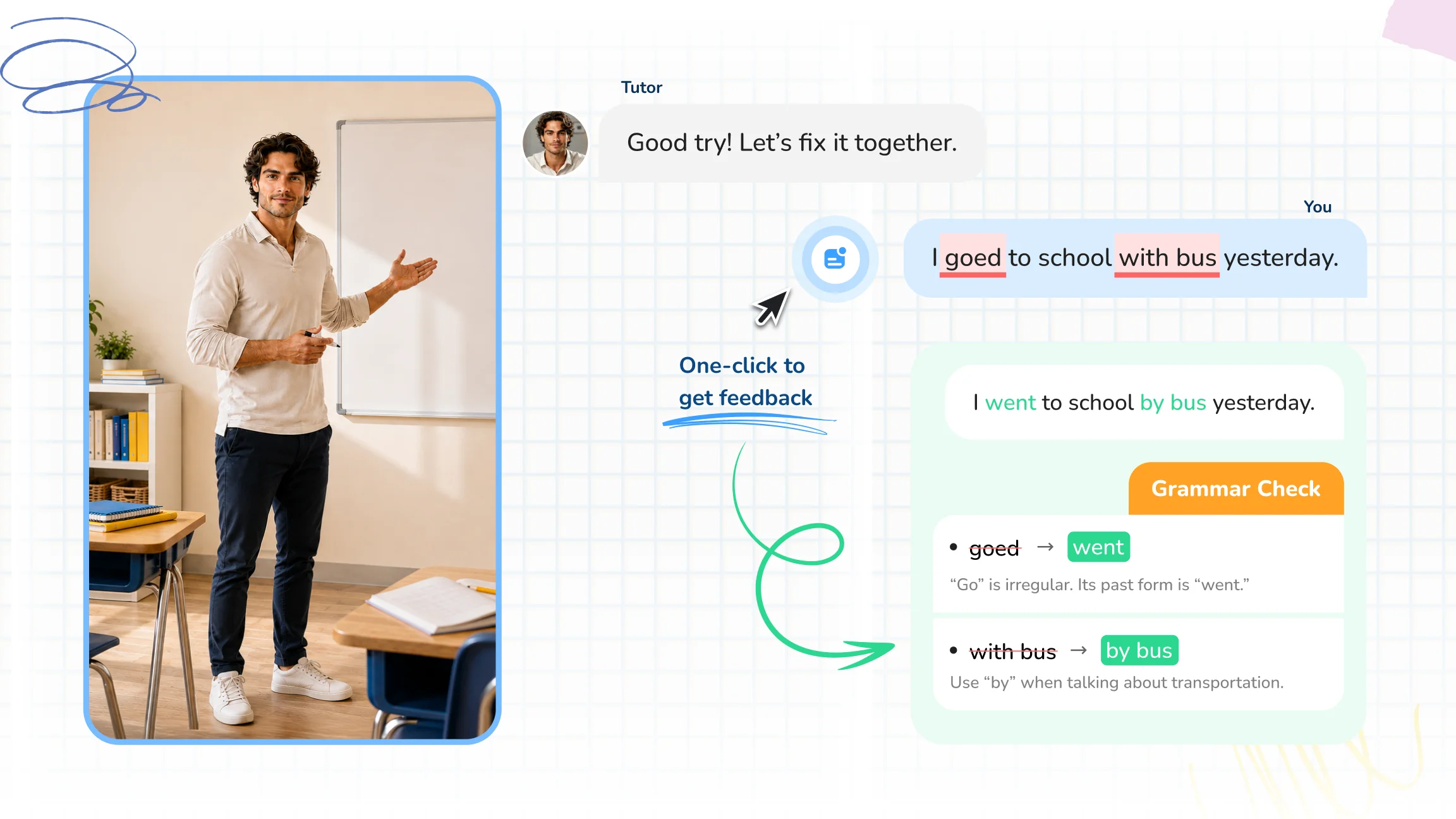
From classroom vocabulary and idioms to wishes and icebreaker questions, this guide gives you everything you need to talk about back to school season in English. The best way to make these words stick is regular, guided practice, and that's exactly what Learna offers: personalized lessons that adjust to your level, interactive speaking practice with an AI tutor, and vocabulary review built around real conversations rather than memorization. Whether you're brushing up before the semester starts or building a habit that lasts all year, Learna turns everyday moments like this into steady language progress.
