Why AI English Tutors Are Becoming Popular in 2026?
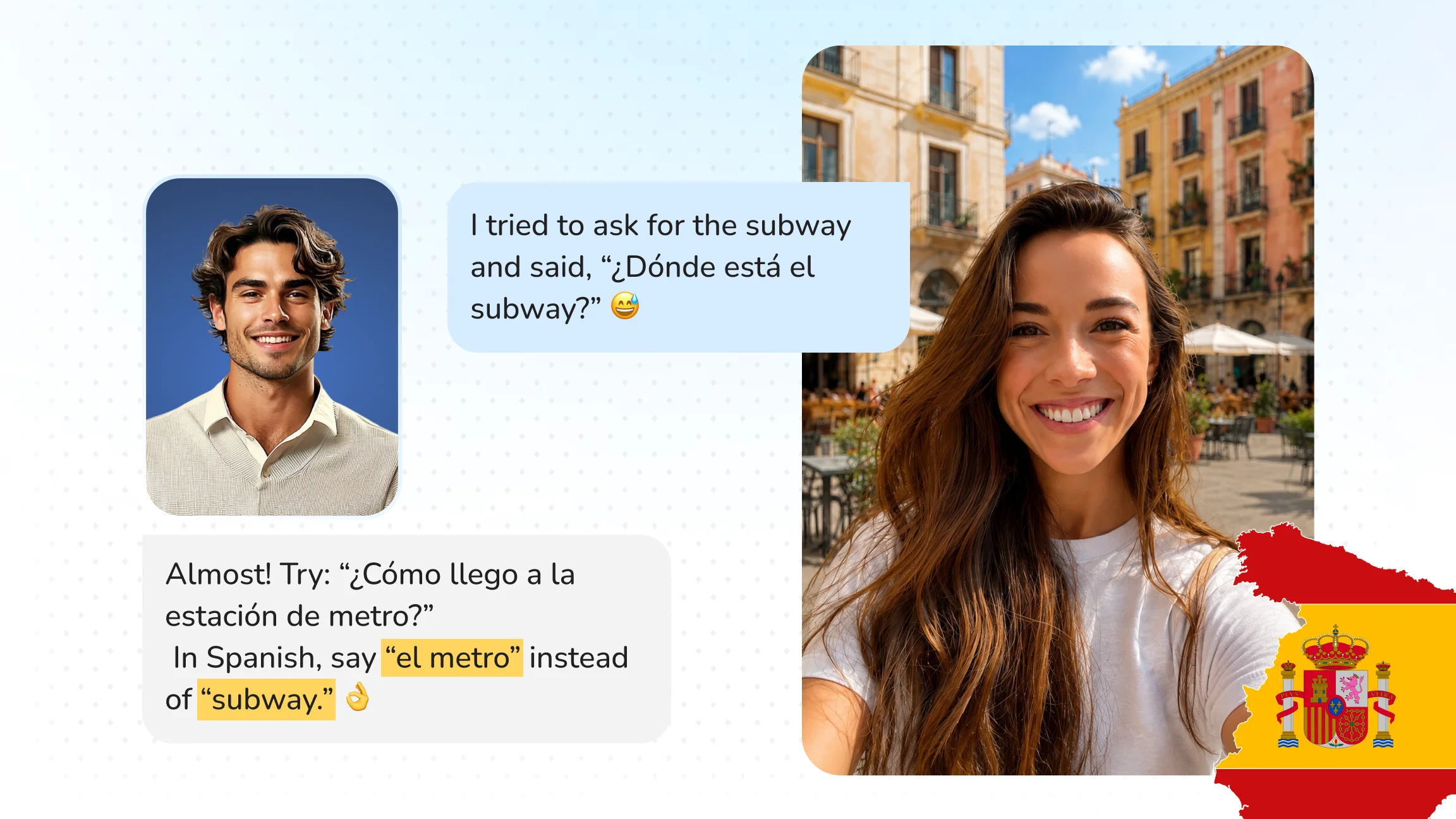
AI English tutors are becoming popular because they address common learner problems: a lack of speaking practice, fear of making mistakes, limited available time, and the need for feedback that matches an individual's specific gaps. Many English learners understand grammar rules well but still freeze during real conversation. An AI tutor creates a private space to speak repeatedly without an audience.
One of the biggest advantages of an AI English tutor is availability. Practice sessions can happen before work, after school, during a break, or in whatever small window of time is actually free that day. Traditional classes require a fixed schedule, while AI-based practice can fit into short daily routines, which helps many learners build consistency over time.
Many English learners hesitate to speak out loud because of the fear of mistakes or embarrassment in front of others. AI tutors reduce this pressure by allowing a learner to repeat phrases, pause, restart, and make mistakes in private. This is particularly useful for shy learners, beginners, and learners who understand English well but lack confidence when speaking.
AI tutors can provide corrections while a learner is actively practicing, rather than after the fact. This includes feedback on pronunciation, word choice, grammar, and sentence structure. Because the correction happens in the moment, a learner does not need to wait until a class session or an assignment review to find out what went wrong.
AI tutors can adjust practice based on a learner's level, recurring mistakes, and stated goals. A beginner may receive simpler sentences and basic conversational exchanges, while an intermediate learner may practice job interviews, travel scenarios, or longer discussions. This kind of adaptive learning is designed to turn passive grammar knowledge into active, personalized English practice.
Where Traditional English Classes Still Have an Advantage?
Traditional classes still matter because human teachers provide emotional support, cultural understanding, social interaction, and a depth of guidance that current AI tools do not fully replicate.
A human teacher can notice frustration, hesitation, motivation problems, or confidence issues in ways an AI tool may not fully register. Encouragement, empathy, and personal connection with a teacher can help a learner stay motivated over a longer period of study.
Language is not only grammar and vocabulary; it also includes tone, humor, slang, politeness, body language, and cultural expectations. Teachers can explain the real-life context behind expressions, workplace communication norms, and cultural differences in a way that goes beyond a scripted exercise.
Scheduled classes can help a learner stay disciplined, since there is a teacher, classmates, homework, and deadlines involved. Some learners genuinely need this kind of external structure to keep studying consistently, which makes traditional classes especially useful for learners who struggle with self-discipline.
A classroom allows learners to hear other students, take part in group discussions, and practice real-time social communication. This kind of group learning supports confidence, collaboration, and the give and take of a live conversation among multiple speakers.
What Research Says About AI Tutors in Education?
Research and reporting on AI-supported learning suggest it can improve practice efficiency, feedback speed, and learner engagement, particularly when used consistently over time. Results vary depending on the specific tool, how it is used, and the learning context, so findings from one study or one platform should not be generalized to every AI tutor or every learner.
Some research points to gains in speaking practice frequency, faster error correction, and stronger day to day engagement when AI tools are used alongside regular study. At the same time, human instruction continues to play an important role, particularly for complex feedback, cultural explanation, and the kind of nuanced communication that AI tools are still developing. Any specific statistic from a single study should be treated as findings from that study rather than a guarantee that applies to every AI English tutor or every learner.
Is Learning English With AI More Effective Than Traditional Methods?
AI can be more effective for certain goals, particularly frequent speaking practice, pronunciation repetition, and personalized review. Traditional methods may be more effective for guided instruction, sustained motivation, and complex communication skills. The answer also depends heavily on the type of learner involved.
For Beginners
Beginners may benefit from AI tutors through repetition, simple dialogues, and low-pressure practice. At the same time, beginners often still need clear human explanations to build a solid grammar foundation and a sense of overall learning direction.
For Intermediate Learners
Intermediate learners often benefit strongly from AI tutors, since they already know a meaningful amount of English but need more speaking time to use it actively. AI conversation practice can help convert passive knowledge into practical, spoken fluency.
For Advanced Learners
Advanced learners may get more value from human teachers for nuance, academic writing, professional communication, and natural conversational style. AI tools can still support advanced learners through daily fluency maintenance and targeted practice on specific weak points.
For Shy Learners
AI tutors can be especially useful for learners who avoid speaking because of embarrassment or anxiety. A private practice environment allows this kind of learner to build confidence before speaking with other people.
For Busy Professionals
AI tutors fit around flexible schedules, while traditional classes often require fixed attendance. For working professionals, AI-based practice can support short daily sessions focused on meetings, presentations, interviews, or workplace vocabulary.
Can AI Replace English Teachers Completely?
AI is unlikely to fully replace English teachers in 2026, because language learning involves emotion, motivation, culture, social communication, and complex human judgment. AI is better understood as a learning support tool rather than a full replacement for a teacher. It can handle repetition, instant practice, pronunciation drills, and conversation simulations effectively, while teachers remain valuable for feedback depth, emotional support, classroom energy, and real-world communication nuance.
The Best Approach in 2026: Combining AI Tutors and Human Learning
For many learners, the strongest approach is a hybrid model: using an AI tutor for daily practice and a traditional class or human teacher for deeper guidance, feedback, and social interaction.
A practical routine might look like this:
AI tutor practice:
Traditional class or human teacher:
Learna can fit into the AI practice side of a routine like this, offering AI-powered speaking practice, adaptive exercises, and guided daily study support for learners who want to keep up consistent English practice between structured lessons.
Features to Look for in an AI English Tutor
Not every AI English tutor offers the same learning experience, so learners should evaluate available features based on their own goals rather than choosing a tool by popularity alone. Useful features to look for include:
Voice-based conversation practice
Pronunciation feedback
Grammar and vocabulary correction
Adaptive difficulty
Real-life roleplay scenarios
Progress tracking
Beginner-friendly guidance
Speaking confidence support
Daily practice structure
AI English tutors are increasingly moving beyond basic exercises and becoming broader learning companions that support speaking, adaptation, and continuous practice. Learna is one example of an AI-powered learning experience built around conversation practice, adaptive exercises, guided learning paths, and structured daily routines.