You will meet these nouns in lectures, assignment instructions, and exam questions, and many of them appear in first-year courses across almost every faculty.
How Can You Use Academic Vocabulary in Essays and Presentations?
Use academic words when they make your meaning more exact, not simply more impressive. In an essay introduction, you might define the issue and explain your approach: "This paper analyzes how social context influences language use." In one sentence, the reader knows both the topic and the task.
When discussing sources, choose verbs that match the strength of the evidence. Write "The findings indicate a relationship" when a study suggests a connection. Use "The study establishes a relationship" only when the research provides strong support. Small choices like this make your essays more accurate and responsible.
Presentation language should also be clear enough for listeners to understand the first time they hear it. Useful signposting sentences include:
"The first factor to consider is access to education."
"This evidence supports the central argument."
"The next section explains the research method."
"These data indicate a change in student preferences."
"The significance of this result becomes clear in context."
Practicing complete sentences turns a passive word list into language you can actually use. It also helps you use advanced vocabulary without making your paper harder to read than it needs to be.
How Can You Practice and Remember Academic Vocabulary?
Spaced repetition helps move words from short-term recognition into long-term memory. Instead of studying a whole list once, review new terms after one day, several days, and one week. A useful flashcard includes a plain definition, an original example sentence, and common word forms.
Contextual practice matters just as much. After reading a textbook page, choose three useful terms and write a short summary using them. Then say that summary aloud as if you were explaining the topic in a seminar. This simple routine builds vocabulary through reading, writing, and speaking at the same time.
A printable copy of this list, or a PDF of the Academic Word List, can help when you are away from class. Still, a list becomes valuable only when you start using the words in your own sentences. Break the full Academic Word List, with its 570 word families, into small weekly groups, and return to difficult words regularly.
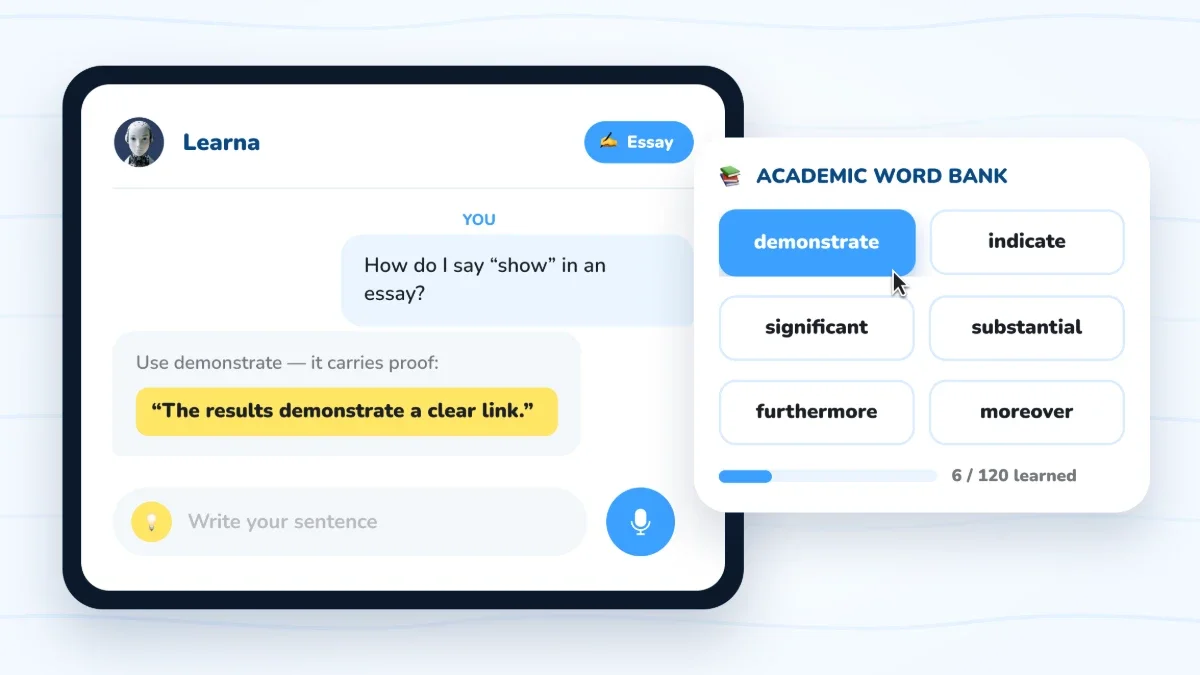
Learna connects academic vocabulary with practical speaking, grammar, and roleplay activities. Its Academic English practice helps you use new words in classroom discussions, presentations, and structured responses, so they become part of your regular study routine.