
How Business English Shapes Your Job Interview?
Business English affects clarity, confidence, and perceived professionalism in a job interview. Interview language differs from everyday speech by favouring a more formal tone, concise structure, and vocabulary tied to roles, processes, and outcomes. Recruiters listen for phrases that show responsibility, measurable impact, and the ability to work with others. Structured answers brief context, clear action, and measurable result help convey competence and keep responses focused. Polished Business English also reduces misunderstandings in multinational teams and signals readiness for professional communication.
Key Expressions Recruiters Expect to Hear
Essential expressions show professionalism and impact. Useful phrases include:
- “I led a project to…”
- “My role involved coordinating…”
- “I improved X by Y% through…”
- “I resolved the issue by implementing…”
- “I collaborated with cross-functional teams to…”
These lines help present achievements, clarify responsibilities, and describe problem-solving with measurable outcomes.
30+ Common Job Interview Questions with Sample Answers
Below are common categories of job interview questions and answers, with sample responses in clear Business English. Practise them aloud and adapt details to actual experience.
1. Tell me about yourself.
- Sample: “A marketing coordinator with three years’ experience in digital campaigns. Focused on data-driven strategies, I increased lead generation by 30% last year through targeted email segmentation and A/B testing.”
2. What are your strengths?
- Sample: “Strong project management and communication skills. I keep teams aligned with clear timelines and deliverables, which helps meet deadlines and reduce rework.”
3. What is your greatest weakness?
- Sample: “Tendency to over-check details. To manage this, a prioritized checklist is used to balance quality with timely delivery.”
4. Why do you want this role?
- Sample: “This role allows application of my analytical skills within a growing team. The company’s focus on data-led decisions matches my background and career goals.”
5. Why did you leave your last job?
- Sample: “Seeking new challenges and a role with broader responsibility in strategic planning, which aligns with current career goals.”
6. Describe a challenging situation and how it was handled.
- Sample: “A project fell behind due to vendor delays. I restructured the timeline, reprioritized tasks, and negotiated expedited deliverables, which recovered the schedule and preserved quality.”
7. How do you handle tight deadlines?
- Sample: “Break tasks into milestones, assign clear ownership, and communicate progress daily. This keeps the team focused and reduces last-minute issues.”
8. Give an example of teamwork.
- Sample: “Worked with sales and product teams to launch a new feature. Regular cross-team meetings and shared KPIs led to a smooth rollout and strong user adoption.”
9. How are decisions made under pressure?
- Sample: “Gather critical facts quickly, consult key stakeholders, and choose the option with the highest chance to meet core objectives while mitigating risk.”
10. What are your salary expectations?
- Sample: “Open to a competitive package that reflects the role’s responsibilities and market standards, with room to discuss performance-based incentives.”
11. How does this role fit your career path?
- Sample: “This position expands leadership responsibilities and strategic planning—key areas for long-term career growth.”
12. Describe a professional achievement.
- Sample: “Led a campaign that increased conversion by 18% through targeted landing pages and refined messaging based on user testing.”
13. How are conflicts resolved in a team?
- Sample: “Address issues directly, listen to perspectives, and agree on a solution that aligns with project goals and timelines.”
14. Tell about a time when a project failed.
- Sample: “A product launch underperformed due to insufficient user testing. Lessons included stronger user validation and earlier stakeholder involvement.”
15. How does one measure success in this role?
- Sample: “Success is measured by clear KPIs—revenue growth, customer retention, or process efficiencies depending on role goals.”
16. Can you explain a gap in your CV?
- Sample: “The gap was used for professional development and certification in project management to strengthen skills relevant to this role.”
17. How to handle constructive feedback?
- Sample: “Accept feedback calmly, implement improvements, and show progress through measurable changes.”
18. What motivates you at work?
- Sample: “Solving complex problems and seeing measurable impact from strategic initiatives.”
19. Describe leadership style.
- Sample: “Supportive and goal-oriented—provide clear direction, remove obstacles, and trust team members to deliver.”
20. How to prioritise tasks?
- Sample: “Use urgency-impact matrix and align priorities with business objectives to focus efforts on high-value tasks.”
21. Questions to ask in a job interview.
- Sample questions: “What are the main priorities for the first six months? How is success evaluated? What are key team challenges today?”
22. Top 10 job interview questions often related to role fit, culture, and performance metrics.
- Sample answers should highlight evidence, quantifiable results, and clear next steps.
23. Tell about a time negotiating a contract.
- Sample: “Prepared benchmark data, proposed a value-based pricing model, and secured mutually acceptable terms that preserved margin.”
24. How to present technical skills to non-technical stakeholders?
- Sample: “Translate features into business outcomes and use simple examples or visuals for clarity.”
25. What is the preferred project management method?
- Sample: “Select the method that fits scope—Agile for iterative projects, Waterfall for fixed-scope deliverables.”
26. How to handle multiple stakeholders?
- Sample: “Establish shared goals, maintain regular updates, and manage expectations with transparent communication.”
27. Describe a time improving a process.
- Sample: “Introduced an automated reporting tool that reduced manual time by 40% and improved data accuracy.”
28. How to train a new team member?
- Sample: “Create a structured onboarding plan with goals, resources, and mentorship to accelerate contribution.”
29. What are long-term career goals?
- Sample: “Aim to move into strategic leadership, focusing on cross-functional impact and measurable growth.”
30. How to approach business english negotiation?
- Sample: “Use clear, objective language, present data, and propose options that meet both parties’ priorities.”
Use these examples as templates. Adapt details to reflect real experience, quantify results where possible, and practise answers aloud for fluency.
How to Practise Job Interview English Effectively?
Consistent speaking practice builds fluency and confidence. Methods include recording responses, roleplaying with peers, and simulating follow-up questions. Focus on short, structured answers: context, action, result. Repeating key expressions helps them sound natural. Practise both prepared answers and spontaneous replies to handle unexpected questions comfortably.
Practice Steps for Interview Success
Step 1: Select relevant questions
Choose five to ten questions that match the role and prepare structured answers with measurable results.
Step 2: Roleplay and record
Simulate the interview, record answers, and review for clarity, pace, and use of key expressions.
Step 3: Refine delivery
Adjust phrasing for brevity, correct pronunciation, and confident tone. Focus on natural pauses and eye contact cues for video interviews.
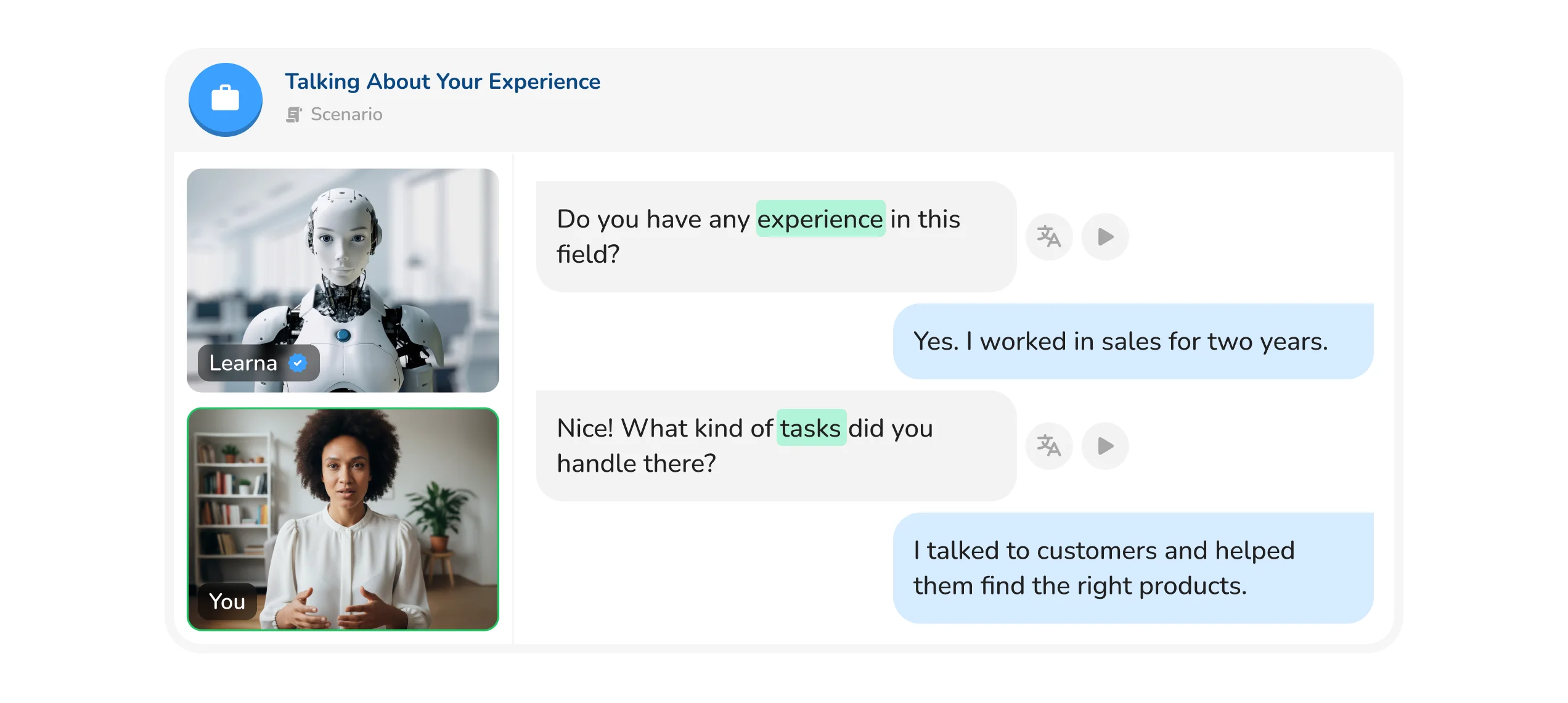
Practise interview answers and receive targeted feedback on pronunciation, fluency, and delivery with Learna’s structured speaking sessions. Start building interview confidence
